
 By
Battery-to-inverter cables carry the highest currents in a solar system. Size them for the inverter’s maximum battery current, keep runs short, and protect them with a fuse close to the battery that is rated at or below the cable’s ampacity and above the inverter’s maximum current. For lithium banks, a Class T fuse is the usual choice because it can safely interrupt very high short-circuit currents.
Wire size and voltage drop calculator
Estimates use the formulas explained in this guide. Plan a complete system with the all-in-one calculator →
Step 1: Maximum current
Max current = Inverter continuous watts ÷ (Low battery voltage × Inverter efficiency)
Using the low end of battery voltage gives a conservative figure, for example 11 V for a 12 V system:
3,000 W ÷ (11 V × 0.90) = 303 A
Many inverter manuals state the recommended cable and fuse directly; always follow them first.
Step 2: Typical sizes (short runs, under about 1.5 m / 5 ft each way)
| Inverter | Battery voltage | Approx. max current | Typical cable | Typical fuse |
|---|---|---|---|---|
| 1,000 W | 12 V | 100 A | 2 AWG (35 mm²) | 125 – 150 A |
| 2,000 W | 12 V | 200 A | 2/0 AWG (70 mm²) | 250 A |
| 3,000 W | 12 V | 300 A | 4/0 AWG (95 – 120 mm²) | 300 – 400 A |
| 2,000 W | 24 V | 100 A | 2 AWG (35 mm²) | 125 – 150 A |
| 3,000 W | 24 V | 150 A | 1/0 – 2/0 AWG (50 – 70 mm²) | 175 – 200 A |
| 5,000 W | 48 V | 125 A | 1/0 – 2/0 AWG (50 – 70 mm²) | 150 – 200 A |
| 8,000 W | 48 V | 200 A | 4/0 AWG (95 – 120 mm²) | 250 A |
Longer runs need thicker cable to keep voltage drop below about 2 to 3%. See solar wire size. Ampacity depends on insulation temperature rating, bundling and enclosure; confirm with your inverter manual and local code.
The fuse rule
- Fuse rating ≥ about 1.25 × the maximum continuous current, so it does not blow under normal use.
- Fuse rating ≤ the cable’s ampacity, so the fuse protects the cable.
- Place the fuse as close as possible to the battery positive terminal (typically within about 18 cm / 7 in).
Which fuse type?
| Fuse type | Interrupt capacity | Typical use |
|---|---|---|
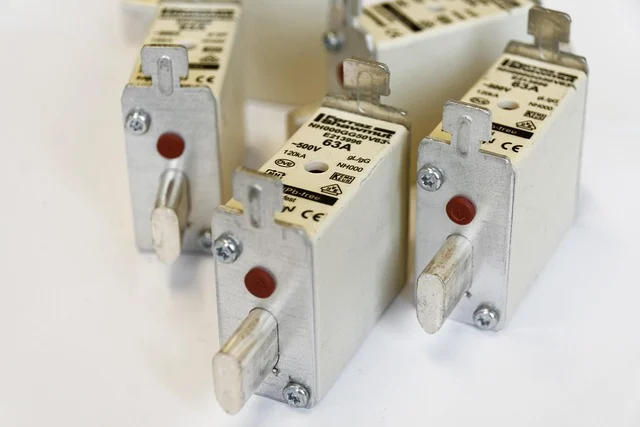
| Class T | Very high (about 20,000 A) | Main battery fuse for lithium and large banks |
| MRBF (terminal fuse) | High (about 10,000 A at 14 V) | Compact main fuse for 12 V systems |
| ANL / mega | Lower | Lead-acid or secondary circuits; check interrupt rating against bank short-circuit current |
| Blade / MIDI | Low to moderate | Small DC branch circuits |
Lithium batteries can deliver enormous short-circuit currents. A fuse with insufficient interrupt capacity may fail to clear the fault safely.
Other circuits to fuse
- Charge controller to battery: fuse at the battery, about 1.25 × controller output current.
- DC-DC charger: fuse at both ends.
- DC distribution panel: main fuse, then individual branch fuses.
- Parallel batteries: individual fuses per battery or string for larger banks.
- PV strings: string fuses when three or more strings are in parallel.
Installation tips
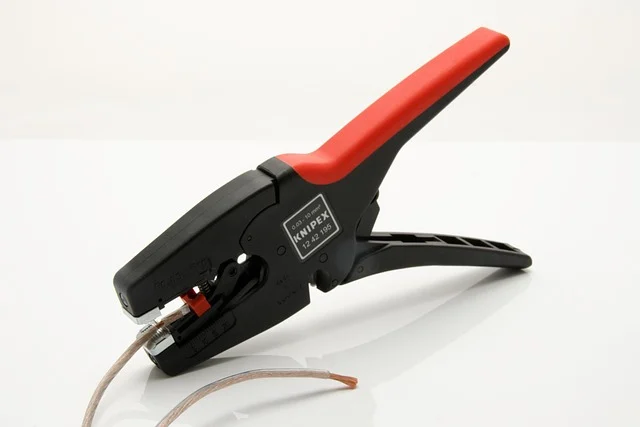
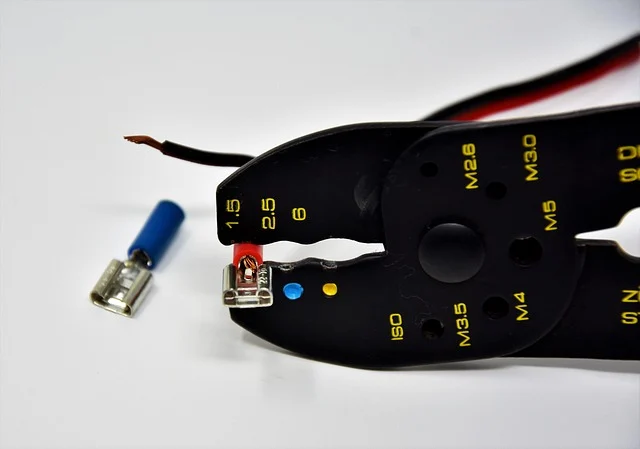
- Use fine-stranded, flexible battery or welding cable, with properly crimped tinned copper lugs (hydraulic crimper preferred) and heat shrink.
- Keep positive and negative cables the same length and route them together.
- Torque terminals to spec; loose lugs cause heat and voltage drop.
- Add a battery disconnect switch rated for the full current.
Check your system’s current with the solar calculator and the 12V vs 24V vs 48V guide.
Worked example: sizing everything for a 2,000 W, 12 V van system
Components: 12 V 200 Ah LiFePO4 (200 A BMS), 2,000 W inverter, 40 A MPPT controller, 30 A DC-DC charger, 12-way DC fuse block.
| Circuit | Max current | Cable (short run) | Fuse |
|---|---|---|---|
| Battery to main busbar | about 220 A combined | 2/0 AWG | 300 A Class T (main) |
| Busbar to inverter | 2,000 ÷ (11 × 0.90) = 202 A | 2/0 AWG | 250 A |
| Controller to busbar | 40 A | 6 AWG | 50 – 60 A |
| DC-DC charger output | 30 A | 8 – 6 AWG | 40 – 50 A |
| Busbar to DC fuse block | 40 A | 6 AWG | 50 – 60 A |
| Fuse block circuits (lights, fan, fridge) | 2 – 10 A each | 16 – 12 AWG | 5 – 15 A each |
Each fuse protects the cable it feeds. The main Class T fuse protects the battery cable and has the interrupt capacity for a lithium short circuit.
Crimping and terminations
- Strip insulation to the depth of the lug barrel.
- Use tinned copper lugs sized for the cable and the stud (for example 2/0 AWG with a 3/8 in or M10 hole).
- Crimp with a hydraulic crimper using the correct die; a hammer crimper is a last resort.
- Tug-test, then add adhesive-lined heat shrink.
- Torque to the terminal maker’s value and recheck after a few weeks of use.
A bad crimp creates resistance, heat and voltage drop, often the hidden cause of inverter shutdowns.
Breakers vs fuses
- DC breakers (rated for DC voltage and interrupt current) double as disconnects and can be reset.
- Fuses are cheaper and simpler, and Class T fuses offer very high interrupt capacity.
- Never use AC-only breakers on DC circuits; DC arcs are harder to break.
Common mistakes
- Fusing for the load instead of the cable.
- Placing the main fuse far from the battery.
- Using automotive blade fuses on high-current circuits.
- Cheap copper-clad aluminium (CCA) cable sold as copper.
FAQ
What size fuse for a 2,000 W inverter at 12 V?
About 250 A with 2/0 AWG cable, following the inverter manual.
Can I use an ANL fuse with lithium batteries?
For large lithium banks, a Class T fuse is recommended because of potential fault currents. ANL may be acceptable for small banks if its interrupt rating exceeds the available fault current.
Do I need a fuse on the negative cable?
Normally no; fuse the positive. Some systems use a shunt or breaker on the negative for monitoring or disconnect purposes.
What size cable for a 1,000 W inverter at 12 V?
About 2 to 4 AWG (25 to 35 mm²) for short runs, with a 125 to 150 A fuse.
How close to the battery should the fuse be?
As close as practical, typically within about 7 in (18 cm), so almost the entire cable is protected.
Related guides
- What Size Battery Backup Do I Need for My Home?
- What Size Battery Do I Need for a 1,000W Inverter?
- Off-Grid Solar Grounding Basics: What You Need to Know
- What Is a Battery Management System (BMS) and Why It Matters
Sources and further reading
- NFPA: Understanding NFPA 70, the National Electrical Code: the US wiring code that covers solar and batteries.
- Battery University: BU-402 What Is C-rate?: charge and discharge rate versus capacity and runtime.
- Battery University: BU-205 Types of Lithium-ion: how lithium chemistries, including LiFePO4, compare.