
 By
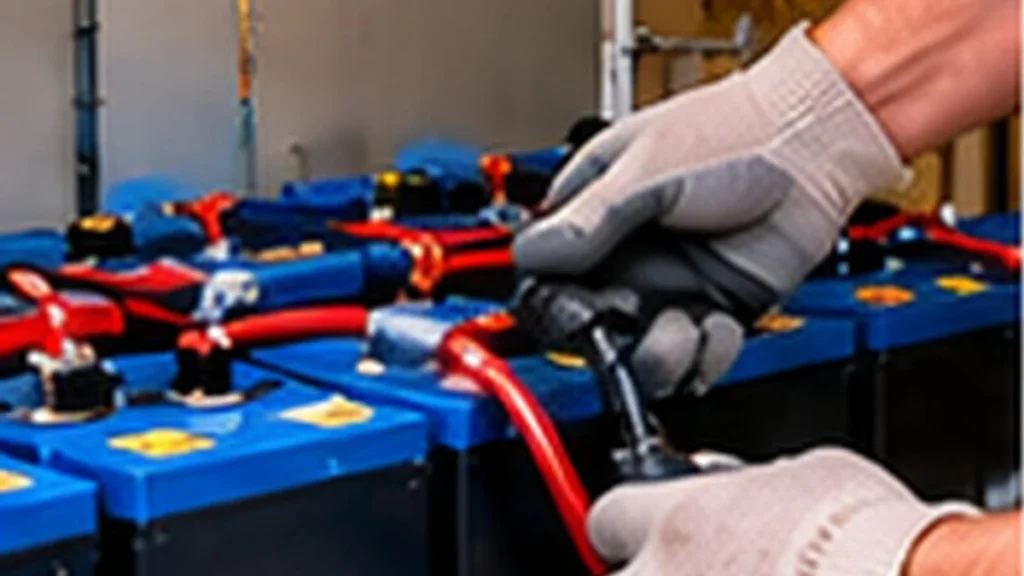
Lead-acid batteries last longest when they are fully recharged regularly, kept above 50% state of charge, charged with correct, temperature-compensated voltages, and, for flooded batteries, topped up with distilled water and equalised periodically. Most early failures in solar systems come from chronic undercharging and sulfation.
Battery state-of-charge from voltage
Estimates use the formulas explained in this guide. Plan a complete system with the all-in-one calculator →
Maintenance schedule
| Frequency | Flooded lead-acid | AGM / gel |
|---|---|---|
| Daily / continuously | Watch state of charge; avoid going below 50% | Same |
| Weekly | Reach full charge at least once | Same |
| Monthly | Check electrolyte level; top up with distilled water after charging; check specific gravity | Check voltages and terminals |
| Every 1 – 3 months | Equalise if specific gravity differs between cells (per maker) | Do not equalise unless the manufacturer specifies |
| Every 6 months | Clean terminals, check torque, inspect for swelling or leaks | Same |
| Yearly | Capacity test | Capacity test |
1. Charge correctly
Typical 12 V settings (always use your manufacturer’s values):
| Stage | Flooded | AGM |
|---|---|---|
| Absorption | 14.4 – 14.8 V | 14.4 – 14.7 V |
| Float | 13.2 – 13.5 V | 13.5 – 13.8 V |
| Equalise | 15.0 – 15.5 V (periodic) | Usually not used |
Enable temperature compensation with a battery temperature sensor; charge voltage should rise in cold and fall in heat.
2. Avoid sulfation
Sulfate crystals form whenever lead-acid sits partially charged. Over weeks they harden and permanently reduce capacity. In solar systems this happens in winter or when the array is too small. Solutions:

- Size the array to fully recharge the battery on typical days. See what size solar panel to charge a 12 V battery.
- Ensure the absorption stage lasts long enough (often 2 to 4 hours).
- Use a generator or grid charger to reach 100% periodically in winter.
3. Watering flooded batteries
- Add distilled water only, after charging (electrolyte expands while charging).
- Keep plates covered; fill to the level indicated by the maker, usually just below the fill tube.
- Single-point watering systems make large banks easier.
4. Equalisation (flooded only)
A controlled overcharge that mixes the electrolyte and breaks down soft sulfation. Follow the maker’s voltage and duration, ventilate well (hydrogen gas is produced), and disconnect sensitive DC loads during equalisation.
5. Terminals and cables
- Clean corrosion with a baking soda solution and a brush, rinse, dry, and apply terminal protectant.
- Keep connections tight to the specified torque.
6. Temperature
Ideal is about 20 to 25 °C. Heat shortens life dramatically; cold reduces capacity. Discharged batteries can freeze. See how long do solar batteries last.
7. Ventilation and safety
Flooded batteries vent hydrogen while charging. Keep them in a ventilated space away from sparks and flames, wear eye protection and gloves, and keep baking soda nearby for acid spills.
Should you switch to lithium?
If maintenance and short life are frustrating, LiFePO4 needs no watering or equalisation, accepts partial charge without harm and lasts several times longer. Also, see LiFePO4 vs AGM.
Worked example: an equalisation session on a flooded bank
A 24 V bank of four 6 V golf-cart batteries shows specific gravity readings of 1.265, 1.260, 1.230 and 1.270 after a full charge. The 1.230 cell is lagging.

- Fully charge the bank normally.
- Check and top up electrolyte so plates are covered (do not overfill before equalising).
- Disconnect sensitive DC loads.
- Run equalisation at the manufacturer’s setting, for example 31.0 V for a 24 V bank (15.5 V per 12 V), for about 2 to 3 hours.
- Check specific gravity every hour; stop when readings stop rising or are within about 0.015 of each other.
- Let the bank cool, then top up water to the normal level.
If one cell remains well below the others after two or three equalisations, it is likely failing.
Specific gravity and state of charge (flooded, about 25 °C)
| State of charge | Specific gravity |
|---|---|
| 100% | 1.265 – 1.280 |
| 75% | about 1.225 |
| 50% | about 1.190 |
| 25% | about 1.155 |
| Discharged | about 1.120 |
Use a temperature-compensated hydrometer, and always wear eye protection.
Lead acid battery maintenance for winter storage
- Fully charge before storage.
- Disconnect all loads (including small parasitic ones).
- Keep on a float charger or a small solar maintainer, or recharge every 4 to 6 weeks.
- Store somewhere cool but above freezing if possible; a fully charged battery resists freezing much better.
Common mistakes
- Topping up before charging, which can cause overflow when electrolyte expands.
- Equalising AGM or gel batteries without the maker’s instruction.
- Using tap water or adding acid.
- Skipping full charges for weeks in winter.
Charging settings checklist for solar controllers
| Setting | Flooded | AGM | Gel |
|---|---|---|---|
| Absorption voltage (12 V) | 14.4 – 14.8 V | 14.4 – 14.7 V | 14.1 – 14.4 V |
| Absorption time | 2 – 4 h | 2 – 3 h | 2 – 4 h |
| Float voltage | 13.2 – 13.5 V | 13.5 – 13.8 V | 13.5 – 13.8 V |
| Equalisation | Yes, periodically | Usually no | No |
| Temperature compensation | Yes | Yes | Yes |
Always use the battery maker’s numbers if they differ.
How to tell a battery is near end of life
- Resting voltage falls quickly after charging.
- One cell’s specific gravity stays low after equalising.
- Runtime is noticeably shorter than when new.
- The battery gets hot while charging.
- The case bulges or leaks.
Safety equipment to keep near lead-acid batteries
- Safety glasses and acid-resistant gloves
- Baking soda and water for spills
- A fire extinguisher suitable for electrical fires
- Good ventilation (a vent fan for enclosed battery rooms)
FAQ
Can I use tap water in my battery?
No. Minerals in tap water contaminate the cells. Therefore, use distilled or deionised water.
How do I check if a lead-acid battery is fully charged?
Resting voltage of about 12.7 V (12 V battery), or specific gravity around 1.265 to 1.280 in all cells for flooded batteries. See battery voltage chart.
Can sulfated batteries be recovered?
Mild sulfation can sometimes be reduced by equalisation. However, severe, long-standing sulfation is usually permanent.
How often should I add water to flooded batteries?
Check monthly; in hot weather or with heavy cycling, top-ups may be needed every 2 to 4 weeks.
Do AGM batteries need maintenance?
No watering, but they need correct charge voltages, regular full charges and clean, tight terminals.
Related guides
- Inverter Low Voltage Cutoff Settings (12V, 24V, 48V)
- What Size Battery Backup Do I Need for My Home?
- What Size Battery Do I Need for a 1,000W Inverter?
- What Is a Battery Management System (BMS) and Why It Matters
Sources and further reading
- Battery University: BU-415 How and When to Charge: charging habits for lead-acid and lithium batteries.
- Battery University: BU-402 What Is C-rate?: charge and discharge rate versus capacity and runtime.
- U.S. Department of Energy: Solar PV System Design Basics: how panels, inverters, controllers and batteries fit together.