
 By
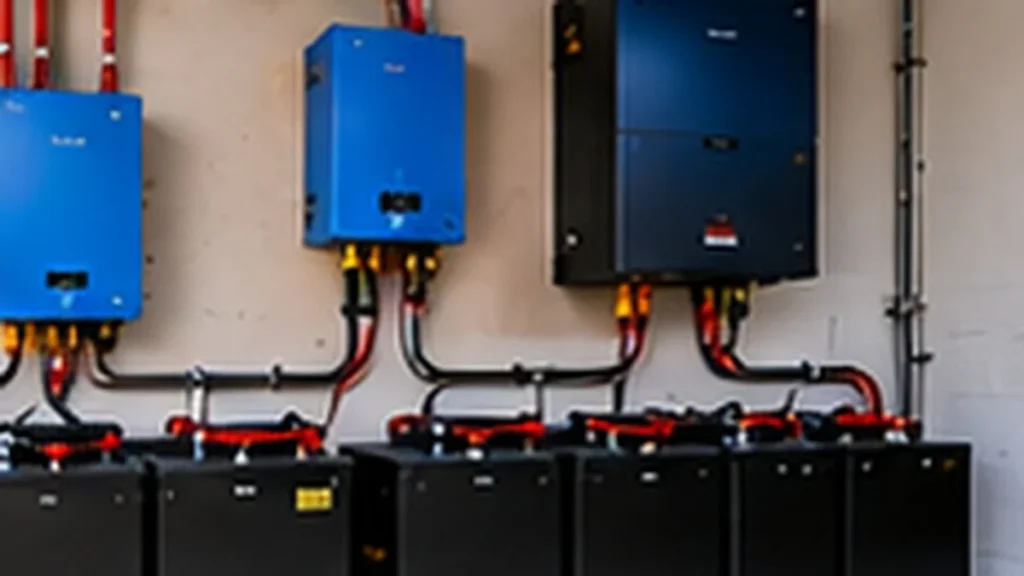
For a 5,000 W inverter, use a 48 V battery bank that can deliver at least 116 A continuously and store enough energy for your runtime. In practice that means at least two 48 V 100 Ah LiFePO4 batteries (about 10 kWh) in parallel. With AGM you would need eight 12 V 200 Ah batteries wired as two strings of four, and you would still get less usable energy.
Batteries for an inverter calculator
Estimates use the formulas explained in this guide. Plan a complete system with the all-in-one calculator →
Step 1: Choose 48 V
At full power, the battery current is the inverter wattage divided by battery voltage and efficiency:
Battery current = Inverter watts ÷ (Battery voltage × 0.90)
| Bank voltage | Current at 5,000 W |
|---|---|
| 12 V | 463 A |
| 24 V | 231 A |
| 48 V | 116 A |
At 12 V you would need cables as thick as a thumb, and even short runs waste power as heat. That is why 5,000 W inverters are almost always 48 V. Read 12V vs 24V vs 48V for the full reasoning.
Step 2: Make sure the batteries can deliver the current
Many 48 V 100 Ah lithium batteries have a 100 A BMS. One battery alone cannot run a 5,000 W inverter at full load: it would shut off at about 4,300 W. Two in parallel share the load at about 58 A each, which is comfortable and also covers short motor-start surges. See battery C-rating explained.
Step 3: Size for runtime
Energy needed = load watts × hours ÷ 0.90 (inverter losses) ÷ depth of discharge.

At full 5,000 W load
| Runtime | LiFePO4 needed (85% DoD) | 48 V Ah | 48 V 100 Ah batteries |
|---|---|---|---|
| 1 hour | 6.5 kWh | 136 Ah | 2 |
| 2 hours | 13.1 kWh | 272 Ah | 3 |
| 4 hours | 26.1 kWh | 545 Ah | 6 |
At a typical 1,500 W average household load
| Runtime | LiFePO4 needed | 48 V Ah | 48 V 100 Ah batteries |
|---|---|---|---|
| 3 hours | 5.9 kWh | 123 Ah | 2 (minimum for current) |
| 8 hours | 15.7 kWh | 327 Ah | 4 |
| 12 hours | 23.5 kWh | 490 Ah | 5 |
Few homes run an inverter at full power for hours. Size your bank for your real daily kWh, then check it can supply the inverter’s peak current.
AGM comparison
With lead-acid you can only use half the capacity, and high currents reduce it further. For about 8 hours at 1,500 W you would need roughly 27 kWh of AGM nameplate capacity: about eleven 12 V 200 Ah batteries in a 48 V arrangement, which does not divide evenly, so in practice twelve batteries in three strings of four. That bank would weigh around 700 kg. This is why lithium dominates at this size. See LiFePO4 vs AGM.
Wiring and protection
- Use a busbar so each battery connects through cables of equal length; unequal cables make batteries share current unevenly.
- Install a Class T fuse or a DC breaker rated for the inverter’s maximum current between the batteries and the inverter. For a 5,000 W, 48 V inverter that is typically 150 to 200 A, but follow the inverter manual. See battery cable and fuse size.
- Size the cables for the current and keep them short. 2/0 AWG copper is common for 48 V inverters in the 5 kW class.
How many solar panels to recharge it?
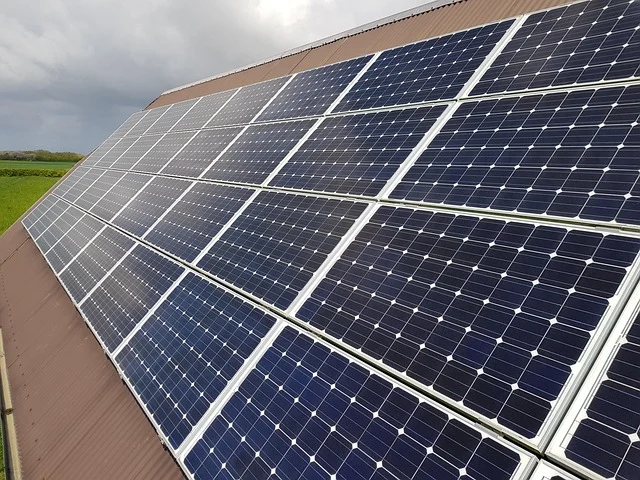
A 10 kWh bank needs around 2.8 kW of panels to refill in a day with 4.5 peak sun hours (10,000 ÷ 3.6). If the inverter also runs daytime loads, add those on top. Run the full system through our solar calculator.
Worked example: an off-grid home with a 5 kW all-in-one inverter
A family runs a 48 V, 5 kW all-in-one inverter. Daily use is 9 kWh: about 3 kWh during the day (when solar covers it directly) and 6 kWh in the evening and overnight.
- Night energy from batteries: 6 kWh ÷ 0.90 inverter efficiency = 6.7 kWh.
- One night plus one cloudy day: 6.7 + 9 ÷ 0.90 = 16.7 kWh of energy from the battery.
- Rated capacity at 85% DoD: 16.7 ÷ 0.85 = 19.6 kWh, so four 48 V 100 Ah rack batteries (20.5 kWh).
- Current check: four batteries with 100 A BMS each give 400 A, far beyond the inverter’s 116 A maximum, so surges are covered.
- Solar to recharge: 9 kWh per day at 4.5 sun hours = 2.5 kW minimum; 3.5 to 4 kW lets the battery recover after cloudy days.
How batteries share the load in a 48 V rack
- Rack batteries connect in parallel through a busbar or the rack’s built-in bus.
- A communication cable links them; one acts as the “master” talking to the inverter over CAN or RS485.
- Matching cable lengths and torque on every connection keep current sharing even.
Choosing between 100 Ah and 200 Ah rack modules
| 48 V 100 Ah modules | 48 V 200 Ah modules | |
|---|---|---|
| Energy each | 5.12 kWh | 10.24 kWh |
| Weight each | about 45 – 50 kg | about 85 – 95 kg |
| Flexibility | Add in small steps | Fewer units, fewer connections |
| Redundancy | One failure removes a small share | One failure removes more |
Common mistakes
- Using one 100 A BMS battery with a 5 kW inverter.
- Mixing rack battery brands in one bank without manufacturer approval.
- No battery communication, leaving the inverter to guess state of charge from voltage.
- Undersized solar, so the bank rarely reaches 100% and balancing never happens.
FAQ
Can I run a 5,000 W inverter on 12 V batteries?
Technically some exist, but 460 A at 12 V needs extremely thick cables, big fuses and a large parallel bank. It is unsafe and inefficient; use 48 V.
How long will a 10 kWh battery run a 5,000 W inverter?
At full load, about 1.5 hours (10 kWh × 0.85 × 0.90 ÷ 5 kW). At a 1,000 W average load, around 7.5 hours.
What else can a 5,000 W inverter run?
A whole small home: refrigerator, well pump, washing machine, microwave and a mini-split AC, though not all at full power at once. See what size inverter do I need.
How many 12 V batteries for a 5 kW inverter?
At 48 V, at least four in series (one string); for 200 A of current capability with 100 A BMS batteries, two strings of four (eight batteries). A pair of 48 V rack batteries is usually simpler.
Can a 5 kW inverter run on a 24 V battery?
Some 24 V 5 kW models exist, but battery current reaches about 230 A. 48 V is strongly preferred.
Related guides
- How Many Batteries Do I Need for a 3,000W Inverter?
- What Size Battery Do I Need for a 1,000W Inverter?
- How Many Batteries Do I Need for Solar? (Sizing Formula + Examples)
- Depth of Discharge (DoD) Explained for Solar Batteries
Sources and further reading
- Battery University: BU-402 What Is C-rate?: charge and discharge rate versus capacity and runtime.
- Battery University: BU-409b Charging Lithium Iron Phosphate: LiFePO4 charging voltages and behaviour.
- U.S. Department of Energy: Inverters and Grid Services Basics: what inverters do and the main types.
- NFPA: Understanding NFPA 70, the National Electrical Code: the US wiring code that covers solar and batteries.