
 By
A typical 4 kW solar panel system in the UK costs £5,000 to £7,000 installed. It produces 2,800 to 3,600 kWh annually. Location and roof orientation affect this. Most UK systems achieve payback in 7 to 10 years. This raises the question, are solar panels worth it uk? They last 25 years or more. This includes Smart Export Guarantee (SEG) payments and electricity bill savings.
This guide details current costs. It also covers expected output by city. It explains how to maximize SEG export rates. Finally, it outlines steps to calculate payback for your specific home in 2026. This helps you make an informed decision.
What will my solar system run?
Estimates use the formulas explained in this guide. Plan a complete system with the all-in-one calculator →
Are solar panels worth it UK? What they produce by city
The UK receives fewer peak sun hours than southern Europe. However, solar panels are highly effective. They generate electricity from daylight, not just direct heat. Output varies significantly across the country and by season. Summer months produce substantially more. The table below shows approximate yearly averages for a well-optimized, south-facing roof.
kWh per year = System kW × Peak sun hours × 0.80 × 365
| City | Peak sun hours | kWh per kW per year | 4 kW system per year |
|---|---|---|---|
| Plymouth / Cornwall | 3.1 | 905 | 3,621 |
| London | 2.9 | 847 | 3,387 |
| Bristol | 2.9 | 847 | 3,387 |
| Birmingham | 2.7 | 788 | 3,154 |
| Manchester | 2.6 | 759 | 3,037 |
| Edinburgh | 2.5 | 730 | 2,920 |
| Glasgow | 2.4 | 701 | 2,803 |
These figures align with the UK industry rule of thumb. It estimates about 750 to 900 kWh per kW of panels each year. Output is highly seasonal. For example, a sunny June day can produce five to ten times as much as a December day. For a detailed monthly pattern, see solar potential by country.
How Much Do Solar Panels Cost in the UK in 2026?
The cost of installing solar panels in the UK has remained relatively stable. Variations depend on system size and panel efficiency. Roof complexity and installer rates also play a role. As of October 2026, homeowners benefit from a zero-rated VAT policy. This applies to solar and battery installations.
- Typical 4 kW system: about £5,000 to £7,000 installed. This usually includes standard panels, an inverter, mounting hardware, and labour.
- 0% VAT: Solar panels and batteries installed in homes are zero-rated for VAT. This applies until March 31, 2027. After this, the rate is due to return to 5%. This temporary relief significantly reduces upfront costs.
- Battery: adding a 5 to 10 kWh battery typically costs several thousand pounds more, ranging from £3,000 to £6,000 depending on capacity and brand.
- Larger systems (e.g., 6 kW): expect to pay £8,000 to £11,000, benefiting from economies of scale.
Always use an MCS-certified installer. You need the MCS certificate to apply for Smart Export Guarantee payments. It also ensures your system meets recognized quality standards.
Understanding Smart Export Guarantee (SEG) Export Rates
Under the Smart Export Guarantee (SEG), larger electricity suppliers must offer payments. They pay for every kWh of surplus electricity you export to the grid. The rates vary widely among suppliers and tariff types. Therefore, it is essential to shop around.
- Flat Export Tariffs: Some suppliers pay around 12p to 15p per kWh. These tariffs offer a consistent rate regardless of the time of export.
- Time-Based Export Tariffs: These can pay significantly more during peak demand periods. This is typically early evening, for example, 4 pm to 7 pm. Rates sometimes reach 20p to 30p per kWh or more. These are ideal if you can schedule your consumption. This maximizes exports during these windows.
- Basic or Legacy SEG Tariffs: The lowest rates can be as little as 4p to 6p per kWh. Suppliers often offer these for minimal compliance. They also offer them to customers not actively seeking better deals.
You can choose an export tariff from a different supplier. However, the best rates often go to customers who buy their electricity from the same supplier. Compare both import and export rates when choosing a supplier. This ensures overall savings. Some innovative tariffs combine smart meters and solar. They offer dynamic rates that change throughout the day. These rates are based on wholesale prices. As a result, they can yield higher returns if you manage them effectively.
Worked Example: Payback for a 4 kW System in London
Let’s calculate the potential annual savings and payback period. We will use a typical 4 kW solar system installed in London. We will use assumed prices and consumption patterns. Your actual figures will vary. They depend on your electricity usage, export tariff, and specific system performance.
- System Cost: £6,000 (with 0% VAT)
- Annual Output (from table): 3,387 kWh a year
- Assumed Home Electricity Price: This is 25p per kWh. Remember, this can fluctuate, so check your latest bill.
- Assumed SEG Export Rate: 12p per kWh
Calculations:
- Total Annual Generation: 4 kW × 2.9 peak sun hours × 0.8 efficiency factor × 365 days = 3,387 kWh a year
- Electricity Used at Home (Self-Consumption): Assuming 50% without a battery (1,694 kWh). This saves you from buying electricity at 25p/kWh.
- 1,694 kWh × 25p = £423.50 saved
- Electricity Exported to Grid: The remaining 50% (1,694 kWh) is exported at 12p/kWh.
- 1,694 kWh × 12p SEG = £203.28 earned
- Total Yearly Benefit: £423.50 (savings) + £203.28 (earnings) = £626.78
- Simple Payback Period: £6,000 (cost) ÷ £626.78 (yearly benefit) = about 9.57 years
Using more of your own solar power significantly raises savings. You can run high-energy appliances during the middle of the day. For example, run washing machines and dishwashers then. You can also add a battery to store surplus energy for evening use. Or, install a solar diverter for your hot water cylinder. Each kWh you use yourself is worth more than a kWh you export.
Planning Permission for Solar Panels in the UK
Most solar panel installations on house roofs in England do not require full planning permission. We consider them ‘permitted development.’ However, they must meet certain conditions. For example, they must not protrude more than 20 cm from the roof slope. Also, they must not sit above the highest part of the roof. There are specific exemptions and additional rules.
- Listed Buildings: Any solar panel installation on a listed building will almost certainly require planning permission. This also applies to installations within its curtilage. You will also need listed building consent.
- Conservation Areas: Panels might be permitted here. However, specific restrictions apply. This is especially true concerning their visibility from public spaces. Always consult your local council.
- Flats: Solar panel installations on flats typically require planning permission.
- Ground-Mounted Systems: Ground-mounted solar arrays have different permitted development rights and size limits.
- Devolved Nations: Scotland, Wales, and Northern Ireland have their own distinct planning regulations, which may differ from those in England. Always check with your local authority or planning portal specific to your region if you are unsure.
Always check with your local council’s planning department before installation. This confirms requirements. It is especially important if your property falls into any special categories.
Grants and Financial Help for UK Solar Installations
Several schemes are available in 2026. They help households with the cost of solar panel installations. They particularly assist those on lower incomes or as part of broader energy efficiency upgrades.
- Warm Homes: Local Grant (England): This scheme can fully fund solar for eligible lower-income households. They must live in homes with lower energy ratings. Typically, these are EPC bands D-G. Eligibility and availability vary by local authority.
- ECO4 (Energy Company Obligation): ECO4 runs until the end of 2026. It can include solar PV as part of a whole-home retrofit package. This applies to eligible low-income and vulnerable households. The focus is on improving overall energy efficiency. So, solar might combine with insulation or heating upgrades.
- Scotland, Wales, and Northern Ireland Schemes: Each devolved nation runs its own support programmes. These often include interest-free loans for energy efficiency improvements. This includes solar panels. As a result, installations are more affordable for a wider range of homeowners. Examples include Home Energy Scotland loans or Nest in Wales.
These grants are generally not available for all households. They focus on specific criteria. These include income, property type, and existing energy performance. Therefore, research what is available in your specific area. Also, check eligibility requirements.
Is Solar Worth It in the UK in 2026?
For most owner-occupied homes with a south, east, or west-facing roof, installing solar panels remains a sound investment in 2026. The financial benefits are strongest when you:
- Are Home During the Day: Maximising self-consumption of your generated electricity.
- Own an Electric Vehicle (EV): Charging an EV during daylight hours can absorb significant surplus solar energy. This reduces reliance on grid electricity.
- Have a Heat Pump: The seasonal match is modest. However, solar can contribute to powering your heat pump. This is especially true during shoulder seasons.
- Pick a Good Export Tariff: Actively shopping for the best Smart Export Guarantee rates can significantly boost your earnings.
Solar may be less suitable if your roof is heavily shaded. It is also less suitable if it is predominantly north-facing. Also, if you plan to move within a few years, the payback period might exceed your residency. However, even with less ideal conditions, environmental benefits and long-term energy independence can still make it appealing.
Which Way Your Roof Faces: Optimising Solar Output
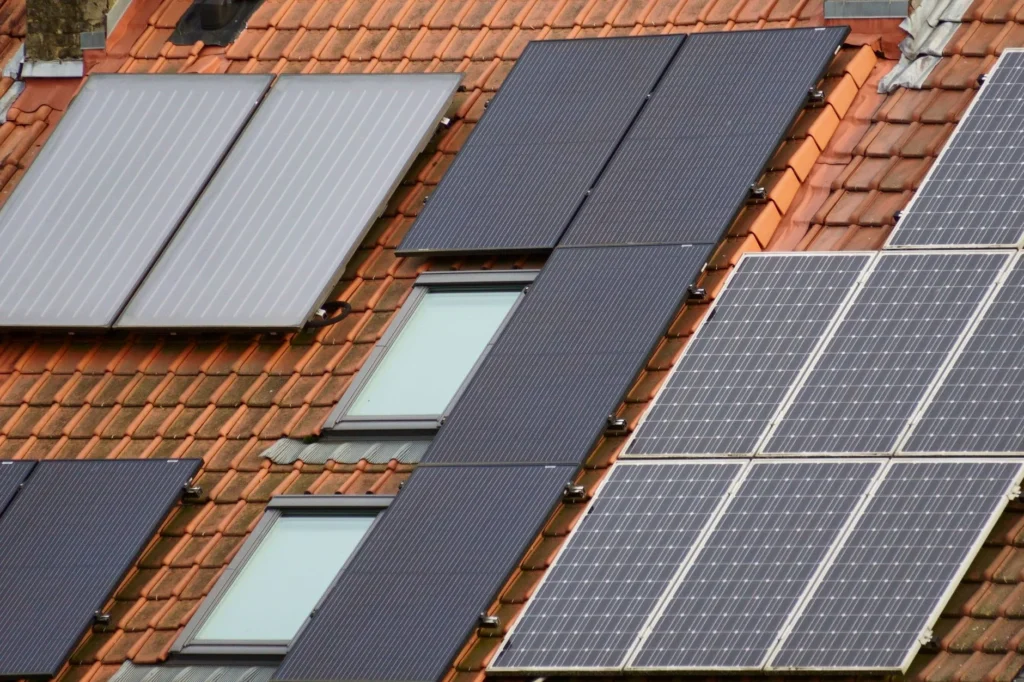
Your roof’s orientation is a critical factor for solar panel efficiency in the UK. This is even more true than in sunnier climates. South-facing roofs are generally ideal. However, east and west orientations can still provide excellent returns. They often align better with household energy demand.

As a guide to yearly output compared with a south-facing roof at an optimal pitch (around 35°):
| Roof faces | Yearly output |
|---|---|
| South | 100% |
| South-east or south-west | about 95% |
| East or west | about 80 to 85% |
| North-east or north-west | about 65 to 70% |
| North | about 55 to 60% |
East and west roofs are worth considering. Their annual output may be slightly lower than south-facing roofs. However, they produce more electricity in the morning or evening. These times often coincide with peak household electricity usage. So, a larger share of their output is used directly at home. This means higher self-consumption. It also reduces the amount you need to buy from the grid. A split east-west system installs panels on both aspects. This can outperform a smaller south-facing array. It spreads generation throughout the day. It also matches household demand more closely.
Integrating Solar with a Heat Pump or Electric Car
Solar panels work most effectively when paired with other significant electric loads in your home. This maximises your self-consumption and the financial benefit of your generated electricity.
- Heat Pumps: A heat pump uses most of its electricity in winter when solar output is naturally low. Therefore, the direct match between solar generation and heat pump demand is modest. However, solar can still contribute during milder periods and reduce your overall electricity bill, especially during spring and autumn.
- Electric Cars: This is an excellent pairing. Charge your electric car at home during the day. You can also use a smart charger that tracks solar output. This lets you use much of your summer solar surplus. Otherwise, you would export this energy for a lower SEG rate. Even in winter, a smart charger can optimize charging times. It coincides with periods of higher solar generation. It also works with cheaper off-peak grid electricity.
- Smart Tariffs and Batteries: Smart tariffs offer cheap overnight electricity. This makes a battery even more worthwhile. You can charge your battery cheaply from the grid in winter for evening use. Then, you can charge it from your panels in summer. This effectively turns your home into a flexible energy hub. Batteries also let you store surplus solar from the day. You can use this during the evening peak. This avoids expensive import rates. It can also earn higher export rates if you have a time-of-use tariff.
From my experience, on a clear summer day, my 4 kW array can produce as much as 25 kWh. On a heavily overcast winter day, it might only manage 2 kWh. The formula provides a solid average. However, real-world conditions highlight the seasonal variance. Maximising self-consumption by charging my EV during the day makes a significant difference to my monthly savings.
Common Problems and How to Fix Them
While solar panels are generally reliable, some common issues can impact their performance. Knowing these can help you maintain optimal output.
- Shading: Even partial shading from trees, chimneys, or neighbouring buildings can drastically reduce output, especially with older inverter technology.
- Fix: Trim trees, consider optimisers or micro-inverters for individual panel performance, or adjust panel placement if possible.
- Dirty Panels: Dust, bird droppings, or pollen can accumulate and reduce efficiency.
- Fix: Rain often cleans panels sufficiently. For stubborn dirt, professional cleaning is recommended, or use a long-handled soft brush and purified water yourself (safely from the ground, if possible). Avoid abrasive cleaners.
- Inverter Faults: The inverter converts DC electricity from panels to AC for your home and the grid. It’s typically the most common component to fail.
- Fix: Check the inverter’s display for error codes. Consult your installer or the manufacturer’s manual. Most inverters come with a 5-10 year warranty.
- Underperforming Panels: Individual panels can degrade or develop faults over time.
- Fix: Monitoring systems can help identify underperforming panels. An MCS-certified technician can diagnose and replace faulty panels under warranty.
- Connectivity Issues: Problems with smart meters, internet connection for monitoring, or grid connection can disrupt exports or data.
- Fix: Check your home Wi-Fi, smart meter display, and contact your DNO (Distribution Network Operator) for grid connection issues.
Regular monitoring of your system’s output through its app or online portal helps you spot issues early. It also helps you maintain peak performance.
Who Solar Panels May Not Suit
While beneficial for many, solar panels are not the ideal solution for every household. Consider these factors before committing:

- Renters: If you do not own your home, you cannot install solar panels without the landlord’s permission. You also will not directly benefit from the long-term investment.
- Short-Term Movers: If you plan to sell your property within a few years (e.g., 1-5 years), the payback period might be shorter than your ownership, reducing the direct financial benefit. While solar can add value to a home, it might not fully recoup the installation cost in a quick sale.
- Heavily Shaded Properties: If your roof experiences significant, unavoidable shading for large parts of the day, year-round, the reduced output might make the investment less attractive.
- North-Facing Roofs (without other options): While not impossible, north-facing roofs generate significantly less electricity. This extends the payback period considerably. However, this is not true if you have very high electricity consumption during those specific hours.
- Limited Upfront Capital: Despite the long-term savings, the initial investment of £5,000 to £10,000+ can be a barrier for some households. This is true if they lack access to grants, loans, or savings.
For these situations, explore other energy-saving measures. Improved insulation, draught-proofing, or switching to a cheaper energy tariff might offer more immediate benefits. They may also be more suitable.
Frequently asked questions
How much electricity does a 4 kW solar system produce in the UK?
A typical 4 kW solar system in the UK produces about 2,800 to 3,600 kWh a year. This depends on your geographic location and the orientation of your roof.
Do solar panels work in winter in the UK?
Yes, solar panels work in winter. However, their output is significantly lower. This is due to shorter daylight hours and less intense sunlight. A 4 kW system might generate 2 to 4 kWh on a winter day. This compares to 15 to 20 kWh on a good summer day.
Is there VAT on solar panels in the UK?
Do I need a battery with solar panels in the UK?
No, a battery is not essential. It increases the amount of solar electricity you use yourself. However, it adds to the upfront cost. It also extends the payback period. Many homeowners install solar without a battery initially. They add one later if their consumption patterns change. They also add one if battery prices become more attractive.
What are the best SEG export rates available in 2026?
In 2026, the best Smart Export Guarantee (SEG) rates can reach 15p to 30p per kWh. This is especially true with time-of-use tariffs that pay more during peak evening demand. Flat rates generally range from 12p to 15p per kWh. These are significantly better than the basic 4p to 6p tariffs.
Related guides
- Solar Panels Canada 2026: Output by City, Rebates by Province and Payback
- Solar Panels in the USA (2026): Cost, Output by City and Incentives After the Tax Credit
- Solar Panels Australia 2026: Output by City, Battery Rebate, Feed-in Tariffs and Payback
- Solar Panels in Germany (2026): Output, Feed-in Tariff, Balcony Solar and Payback
Sources and further reading
- GOV.UK: VAT Notice 708/6, Energy-Saving Materials: zero VAT on installed solar panels and other energy-saving materials until 31 March 2027.
- Ofgem: Smart Export Guarantee (SEG): how UK export payments work.
- Energy Saving Trust: Solar Panels: UK costs, savings and benefits.
- MCS: Find a Certified Installer: UK installer certification, needed for SEG payments.