
 By
Depth of discharge (DoD) is the percentage of a battery’s used capacity. For example, you drain a 100 Ah battery. It has 30 Ah remaining. So, you have a 70% DoD. DoD is the mirror image of state of charge (SoC). Thus, 70% DoD equals 30% SoC. You must plan for a safe DoD. This decision determines your battery bank’s necessary size. You can plan for about 80 to 90% for LiFePO4. However, plan for only 50% for lead-acid.
Solar battery bank calculator
Estimates use the formulas explained in this guide. Plan a complete system with the all-in-one calculator →
Why DoD matters
Every battery chemistry wears faster with deeper cycling. Therefore, using less of the battery daily extends its cycle life. However, this means buying more capacity upfront. You must balance cost against lifespan when choosing the right DoD.
Typical cycle life by DoD
These are typical figures; check your battery’s data sheet.

| DoD per cycle | Flooded / AGM lead-acid | LiFePO4 |
|---|---|---|
| 30% | 1,200 – 2,000 cycles | 8,000+ cycles |
| 50% | 600 – 1,000 cycles | 6,000 – 8,000 cycles |
| 80% | 300 – 500 cycles | 3,000 – 6,000 cycles |
| 100% | 150 – 300 cycles | 2,000 – 4,000 cycles |
Deep discharges shorten lead-acid battery life. However, LiFePO4 handles deep cycling much better. As a result, its usable capacity effectively doubles.
DoD in battery sizing
Battery capacity (Ah) = Daily Wh × Days of autonomy ÷ (Voltage × DoD)
For 3 kWh per day, one day, 24 V:
- LiFePO4 at 85% DoD: 3,000 ÷ (24 × 0.85) = 147 Ah
- AGM at 50% DoD: 3,000 ÷ (24 × 0.50) = 250 Ah
Our solar calculator automatically applies 85% for lithium. It also applies 50% for lead-acid. See how many batteries for solar.
Why we use 85% for LiFePO4, not 100%
LiFePO4 can technically deliver 100% of its rated capacity, but:
- The BMS may cut off early at low temperature. Also, it may cut off with high current.
- capacity fades over the years, typically to around 80% by end of life
- keeping a 10 to 15% reserve protects against unexpected cloudy days
Planning on 85% means your system still meets its design years later.
Lead-acid: why 50% is the limit
Discharging lead-acid batteries below 50% accelerates sulfation. It also causes plate damage. Regularly hitting 80% DoD can cut an AGM battery’s life. For instance, it might last only one or two years of daily use. Additionally, lead-acid batteries need regular full charges to stay healthy. See lead-acid battery maintenance for more information.
How to measure DoD in practice
- Battery monitor with a shunt: counts amp-hours in and out; the most accurate method for any chemistry.
- Lithium battery Bluetooth app: most BMS units report SoC.
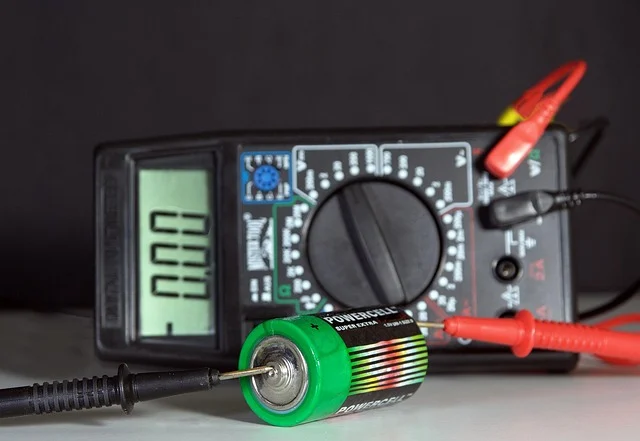
- Resting voltage (lead-acid): This is reasonably reliable. However, the battery must rest for a few hours first. See battery voltage chart.
Voltage is a poor guide for LiFePO4 batteries. This is because their voltage barely changes between 90% and 20%.
Setting inverter cutoffs to protect DoD
Set your inverter’s low-voltage cutoff. It must shut down before the battery passes your planned DoD. For instance, use about 12.0 V for a 12 V AGM under light load. Also, follow the lithium battery maker’s recommendation. See inverter low voltage cutoff.
Worked example: lifetime energy from two battery banks
Both banks are 12 V 200 Ah and cycle once per day.
AGM at 50% DoD:
- Usable per cycle: 12 V × 200 Ah × 0.50 = 1.2 kWh
- Typical cycle life at 50% DoD: about 700 cycles
- Lifetime energy: 1.2 × 700 = 840 kWh (about 2 years of daily use)
LiFePO4 at 85% DoD:
- Usable per cycle: 12.8 V × 200 Ah × 0.85 = 2.18 kWh
- Typical cycle life at 80 – 90% DoD: about 4,000 cycles
- Lifetime energy: 2.18 × 4,000 = 8,700 kWh (over 10 years, typically limited by calendar aging)
The lithium bank delivers roughly ten times more energy over its life. Therefore, divide each bank’s price by its lifetime kWh to compare true storage cost.
Shallower cycling to stretch lead-acid life
You might use lead-acid batteries for now. If so, size the bank larger. This way, daily use is only 25 to 30% DoD. As a result, you can more than double its cycle life. This is much better than 50% DoD. For example, consider a cabin. It uses 1 kWh overnight.
| Bank (12 V AGM) | DoD per night | Approx. cycle life |
|---|---|---|
| 170 Ah | 50% | 600 – 800 |
| 280 Ah | 30% | 1,200 – 1,500 |
A bigger battery bank costs more upfront. However, it lasts much longer. It also leaves reserve power for cloudy days.
Depth of discharge and days of autonomy
Your DoD limit applies to the whole cloudy-weather reserve. It does not just apply to one night. For example, you plan two days of autonomy with AGM. You need enough capacity. Two full days of use must still only reach 50%. This is why lead-acid off-grid banks get very large. See days of autonomy.
Common mistakes
- When you calculate for lead-acid, use 100% DoD. This halves the bank you really need.
- Ignoring Peukert: at high current, lead-acid hits its 50% voltage point earlier.
- Running lithium to 0% every day when a slightly larger bank would stay in the gentler middle range.
- Confusing DoD with SoC when setting generator auto-start or inverter cutoff.
Recommended DoD settings by use
| Use | LiFePO4 daily DoD | Lead-acid daily DoD |
|---|---|---|
| Off-grid daily cycling | 70 – 85% | 30 – 50% |
| RV / van | 80 – 90% | 50% |
| Grid-tied self-consumption | 80 – 90% (with backup reserve) | Not recommended |
| Backup only | Keep near full | Keep on float |
FAQ
What is a good depth of discharge?
For LiFePO4, 80 to 90% daily is fine. However, for lead-acid, stay at or above 50% state of charge.
Is DoD the same as usable capacity?
Effectively, yes. Usable capacity = rated capacity × planned DoD.
Does shallow cycling help lithium?
Yes, it is modestly gentler. Cycling between roughly 20% and 90% is better than 0 to 100%. However, LiFePO4 already lasts many years in normal solar use. See how long do solar batteries last for details.
What DoD do home batteries use?
Most home lithium batteries let you use 90 to 100% of the rated usable capacity. Manufacturers already hold back a reserve. So, the “usable kWh” figure is what you plan with.
Can I set a DoD limit on my inverter?
Many hybrid inverters let you set a minimum state of charge. For example, you can set it to 20% for daily cycling. You can then keep the rest for backup.
Does deep discharge damage lithium batteries?
Occasional deep discharges are fine within the BMS limits. But regularly running to 0% slightly shortens life.
Related guides
- LiFePO4 vs AGM Batteries for Solar: Which Is Better?
- How Many Batteries Do I Need for a 3,000W Inverter?
- Can You Mix Old and New Batteries in a Solar Bank?
- Battery C-Rating Explained (Charge and Discharge Rates)
Sources and further reading
- Battery University: BU-415 How and When to Charge: charging habits for lead-acid and lithium batteries.
- Battery University: BU-205 Types of Lithium-ion: how lithium chemistries, including LiFePO4, compare.
- Battery University: BU-409b Charging Lithium Iron Phosphate: LiFePO4 charging voltages and behaviour.