
 By
For a 3,000W inverter, you’ll typically need a minimum of four 12V 100Ah LiFePO4 batteries wired in a 2-series, 2-parallel configuration to create a 24V 200Ah bank. This setup provides sufficient continuous current (around 200A) and usable energy (approximately 5.1 kWh) to support the inverter’s full output and common appliances. A 24V system is generally recommended for efficiency and safer cable management at this power level.
Batteries for an inverter calculator
Estimates use the formulas explained in this guide. Plan a complete system with the all-in-one calculator →
Why Does Inverter Wattage Dictate Battery Needs?
Your inverter’s wattage rating, such as 3,000W, determines its maximum continuous electrical current. This current draw is the primary factor for sizing your batteries. They must supply this power without excessive voltage sag. Also, they must avoid overheating internal components. Therefore, higher wattage requires more current and more capable batteries.
What System Voltage Should You Choose for a 3,000W Inverter?
For a 3,000W inverter, the most practical and efficient battery bank voltages are 24V or 48V. While a 12V system can technically power a 3,000W inverter, it’s generally not recommended due to several drawbacks:
- High Current Draw: A 12V system requires significantly higher current to deliver 3,000W (around 278A continuous). This extreme current puts immense strain on batteries, their Battery Management Systems (BMS), cables, and fuses.
- Thicker Cables: You need extremely thick cables. For example, use 4/0 AWG. These expensive cables safely handle such high currents. However, they can be challenging to route and terminate.
- Increased Losses: Higher currents lead to greater resistive losses in cables and connections, reducing overall system efficiency.
- Limited Battery Options: Many 12V batteries cannot sustain a 278A continuous draw. Their BMS units also have limitations. Therefore, you will need multiple units in parallel. However, this adds complexity and cost.
A 24V system halves the current draw. This is true compared to a 12V system for the same wattage. Therefore, it is a more manageable and efficient choice. A 48V system further reduces current. This is ideal for even larger setups. However, 24V strikes a good balance for a 3,000W inverter.
How to Calculate Your Required Battery Current (Step 1)
The first step is to determine the maximum continuous current your inverter will draw from your battery bank.
Current = 3,000 W ÷ (Battery Voltage × 0.90)
| System Voltage | Current at Full Load (3,000W) |
|---|---|
| 12 V | 278 A |
| 24 V | 139 A |
| 48 V | 69 A |
As the table shows, a 12V system requires nearly 280 amps, which is a substantial load for any battery bank. A 24V system cuts this in half to 139 amps, making it much more feasible for standard LiFePO4 batteries.
How Many Batteries Do You Need for Current Delivery? (Step 2)
Once you know the required current, you must select batteries capable of supplying it. The crucial factor here is the continuous discharge rating of each battery’s internal Battery Management System (BMS). Most common 12V 100Ah LiFePO4 batteries have a 100A continuous discharge BMS. Some higher-end models offer 150A or even 200A.
To meet the inverter’s current demand, you’ll need to arrange batteries in series and/or parallel:
| System Voltage | 100A BMS Batteries Needed for Current | Resulting Bank Configuration & Energy |
|---|---|---|
| 12 V | 3 in parallel (300 A total) | 12 V 300 Ah, 3.8 kWh |
| 24 V (using 12V batteries) | 2 strings of 2 (200 A total) | 24 V 200 Ah, 5.1 kWh |
| 48 V (using 12V batteries) | 1 string of 4 (100 A total) | 48 V 100 Ah, 5.1 kWh |
For a 24V system, two 12V 100Ah batteries in series create a 24V 100Ah bank. This bank can handle 100A. A 3,000W inverter demands 139A. So, you would need two such series strings in parallel (2S2P). This creates a 24V 200Ah bank. It has a total continuous current capability of 200A. This setup provides more stored energy (5.1 kWh). You use the same number of batteries as a 12V system. Also, it allows for much thinner, more manageable cables.
How Much Energy (kWh) Do You Need for Your Desired Runtime? (Step 3)
Your battery bank must supply peak current. In addition, it must store enough energy. This energy powers your appliances for the desired duration. You calculate this based on your average load. Also, consider how many hours you expect to run it.
Battery Energy Needed (kWh) = (Average Load Watts × Hours) ÷ 0.90 (Inverter Eff.) ÷ 0.85 (LiFePO4 Usable DoD)
| Average Load | Desired Runtime | LiFePO4 Energy Needed | Equivalent 24V Bank Size |
|---|---|---|---|
| 3,000 W | 1 hour | 3.9 kWh | 24 V 200 Ah (minimum for current) |
| 1,500 W | 2 hours | 3.9 kWh | 24 V 200 Ah |
| 1,000 W | 4 hours | 5.2 kWh | 24 V 200 – 300 Ah |
| 500 W | 8 hours | 5.2 kWh | 24 V 200 – 300 Ah |
| 300 W | 24 hours | 9.4 kWh | 24 V 400 Ah |
In practice, you should size your bank based on your expected daily kWh consumption. Then, confirm the chosen bank can supply the inverter’s maximum current. Our battery sizing formula can help with a full system calculation.
Why LiFePO4 Batteries Are Recommended Over AGM
While technically possible, using Absorbent Glass Mat (AGM) lead-acid batteries with a 3,000W inverter is generally impractical and inefficient, especially for sustained high loads:
- Voltage Sag: Lead-acid batteries, including AGM, suffer from significant voltage sag under high current draws (like the 139A for a 24V 3,000W inverter). This can trigger low-voltage shutdown on the inverter long before the battery is actually empty, severely limiting usable capacity. See inverter low voltage cutoff.
- Usable Capacity: You should not discharge AGM batteries below 50% DoD. This prevents damage and extends their lifespan. So, you need double the nameplate capacity of LiFePO4. This gives you the same usable energy.
- Weight and Size: You might need eight 12V 100Ah AGM batteries. This achieves 4 kWh of usable energy. For example, use four strings of two batteries. These batteries will weigh about 240 kg (530 lbs). In contrast, LiFePO4 offers superior energy density.
- Cycle Life: LiFePO4 batteries typically last 3,000-5,000 cycles or more, while AGM batteries offer 400-800 cycles at 50% DoD. LiFePO4 provides a much lower cost per cycle over its lifespan.
For high-power applications like a 3,000W inverter, the benefits of LiFePO4 (stable voltage, high usable capacity, longer lifespan, lighter weight) far outweigh the initial cost difference. See LiFePO4 vs AGM.
Essential Wiring: Cables, Fuses, and Busbars
Correct wiring is critical for safety and performance, especially with high-current systems. Undersized cables can overheat and pose a fire risk, while improper fusing offers no protection.
| System Voltage | Typical Cable Size (short run) | Typical Fuse Size |
|---|---|---|
| 12 V, 278 A | 4/0 AWG | 300 – 350 A Class T |
| 24 V, 139 A | 1/0 – 2/0 AWG | 175 – 200 A Class T |
| 48 V, 69 A | 4 AWG | 100 A |
- Cable Sizing: The table above provides typical sizes for short runs (under 5-6 feet). Longer runs will require even thicker cables to minimize voltage drop. Always use high-quality, flexible stranded copper wire.
- Fuses: A main Class T fuse is essential. Place it between your battery bank and the inverter. This protects against short-circuits. Also, if you have multiple parallel battery strings, fuse each string individually. Connect these fuses at the busbar. Always follow your inverter manual. It provides exact fuse ratings and recommendations.
- Busbars: Use robust busbars when you connect batteries in parallel. Connect each battery to the busbar with equal-length cables. This ensures current is shared evenly among all batteries. As a result, you prevent premature wear on individual units.
See battery cable and fuse size and wiring batteries in series and parallel for more detailed guidance.
Recharging Your Battery Bank
Once you’ve sized your battery bank, you need a charging system capable of replenishing its energy. For example, a 24V 200Ah LiFePO4 bank (about 4.4 kWh usable) would require roughly 1,200W of solar panels to fully recharge in a single day, assuming 4.5 peak sun hours. This calculation also needs to account for any loads running during the day. Consider these charging sources:
- Solar Panels: The most common method for off-grid systems. Match your solar charge controller to your battery bank voltage (e.g., a 24V MPPT controller for a 24V bank).
- Shore Power/Generator: An AC-to-DC battery charger can quickly replenish your bank when connected to grid power or a generator.
- Alternator (DC-DC Charger): For RVs or marine applications, use a DC-DC charger. It efficiently charges your house battery bank. It draws power from the vehicle’s alternator. Be sure to rate it for your battery voltage and chemistry.
Use the solar calculator for a comprehensive system sizing including charging requirements.
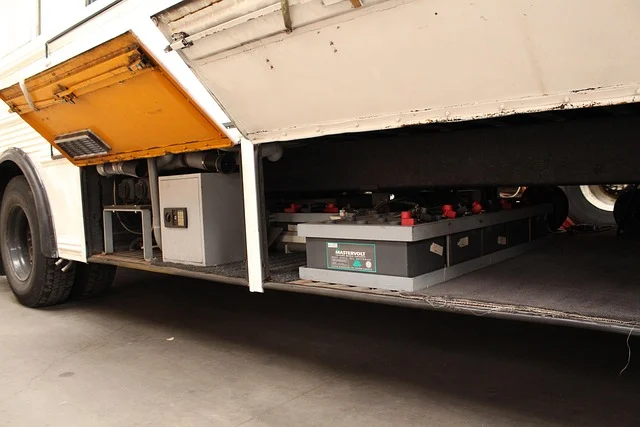
Worked Example: A 24V RV Build Around a 3,000W Inverter-Charger
Consider an RV owner who wants to install a 3,000W inverter-charger to power a microwave, coffee maker, and occasionally run an RV air conditioner (with a soft starter to reduce startup surge).
- Peak Current Calculation:
- 3,000 W ÷ (24 V × 0.90) = 139 A continuous.
- With an AC soft starter, the air conditioner’s surge might still briefly reach 250 A or more, so batteries need robust surge capability.
- Battery Choice for Current:
- The owner selects two 24V 100Ah LiFePO4 batteries. Each has a 150A continuous BMS and a 300A surge rating.
- Wired in parallel, these two 24V batteries create a 24V 200Ah bank, offering 300A continuous discharge and 600A surge capability. This comfortably handles the inverter’s demands. Total energy: 5.1 kWh.
- Energy Check for Runtime:
- Daily use without AC is estimated at 3 kWh. One hour of AC adds about 1.5 kWh.
- The 24V 200Ah bank provides approximately 4.4 kWh of usable energy. This covers a full day of typical use plus a short AC run.
- Cables and Fuses:
- 2/0 AWG cables are chosen from the busbar to the inverter.
- You install a 175A to 200A Class T fuse. This fuse is for the main inverter connection.
- Each of the two 24V batteries is individually fused at the busbar. This protects against short circuits within a single battery.
- Charging System:
- 600W to 800W of roof-mounted solar panels are installed to replenish the bank during sunny periods.
- You can add a 40A 24V DC-DC charger. This charges the house bank. It uses the vehicle’s 12V alternator while you drive.
Using 12V Batteries with a 24V Inverter
It’s very common and often more flexible to build a 24V (or 48V) battery bank using multiple 12V LiFePO4 batteries. This allows you to scale your system by adding more 12V batteries as needed.
| 12 V 100 Ah Batteries | Arrangement | Resulting Bank | Continuous Current (100A BMS) |
|---|---|---|---|
| 2 | 2S (2 in series) | 24 V 100 Ah (2.56 kWh) | 100 A, about 2,100 W |
| 4 | 2S2P (2 series strings of 2 parallel) | 24 V 200 Ah (5.12 kWh) | 200 A, about 4,300 W |
| 6 | 2S3P (3 series strings of 2 parallel) | 24 V 300 Ah (7.68 kWh) | 300 A, about 6,400 W |
When you wire 12V batteries in series, always confirm the manufacturer permits this connection. Use identical batteries of the same brand, capacity, and age. Also, ensure you charge them to the same voltage level before connecting them. See how to wire batteries in series and parallel for proper techniques.
Common Mistakes to Avoid When Sizing Batteries for a 3,000W Inverter
Even experienced installers can make simple errors. Watch out for these common pitfalls:
- Sizing batteries only by energy (Ah or kWh) and forgetting their continuous current capability (BMS limit). A large bank might have plenty of energy but can’t deliver it fast enough if the BMS is undersized.
- Using long, thin cables between batteries and the inverter. This causes excessive voltage drop and heat, reducing efficiency and posing a fire hazard.
- Failing to install individual battery fuses in a parallel bank. If one battery fails internally, it can draw excessive current from others and create a dangerous situation.
- Attempting to run a 3,000W inverter at 12V with insufficient batteries or an undersized BMS. The current demands are simply too high for most 12V setups.
- Overlooking inverter surge capacity for appliances like microwaves or power tools. While soft starters help, the battery bank and BMS must still handle brief, higher current spikes.
- Ignoring environmental conditions. Batteries perform differently in extreme heat or cold, impacting their capacity and lifespan.
Who This Setup May Not Suit
A 3,000W inverter and the associated battery bank is a significant investment and may not be necessary for everyone:
- Consider small, portable needs. You might only need to power small electronics. Perhaps you charge phones or run a laptop for a few hours. In this case, a much smaller inverter could work. For example, a 500W-1000W inverter and a single 12V 100Ah battery might be enough.
- Think about grid-tied systems without storage. Your primary goal may be to reduce your electricity bill. Also, you might remain connected to the utility grid. Then a grid-tied solar system without batteries could be more cost-effective.
- Budget-Constrained Projects: While LiFePO4 offers long-term value, the initial investment for a 3,000W inverter and a robust LiFePO4 bank is considerable. If budget is extremely tight, you might need to reconsider your power needs or explore smaller systems.
Frequently Asked Questions
Can I run a 3,000 W inverter on two 100 Ah batteries?
At 12V, two 100Ah batteries in parallel provide 200A. Each has a 100A BMS. This is enough for about 2,000W, not the full 3,000W. However, at 24V, two 12V 100Ah batteries in series give you only 100A continuous. This is sufficient for about 2,100W. So, for full 3,000W output, you need more batteries. Alternatively, use batteries with higher-current BMS units.
How long will a 3,000 W inverter run on a 200 Ah battery?
A 24V 200Ah lithium bank offers about 4.4 kWh usable power. It can run a continuous 3,000W load for about 1.3 hours. Alternatively, it can power a smaller 500W load for around 8 hours. This assumes optimal conditions and inverter efficiency.
What can a 3,000 W inverter power?
A 3,000W inverter can power multiple household appliances simultaneously, including a microwave, coffee maker, full-size refrigerator, various power tools, and with a soft starter, most RV air conditioners. See what will a 3,000 W inverter run for more examples.
How long will a 3,000 W inverter run on 4 batteries?
If these are four 12V 100Ah lithium batteries configured as a 24V 200Ah bank (about 4.35 kWh usable), they can run a 3,000W load for approximately 1.3 hours, or a 500W load for about 8 hours before needing a recharge.
Do I need lithium for a 3,000 W inverter?
While not strictly mandatory, lithium iron phosphate (LiFePO4) batteries are highly recommended for a 3,000W inverter. They handle the high current draw far better with less voltage sag, offer a much higher usable capacity, and provide a significantly longer lifespan compared to lead-acid alternatives like AGM. See LiFePO4 vs AGM.
Related guides
- What Size Battery Do I Need for a 1,000W Inverter?
- How Many Batteries Do I Need for a 5,000-Watt Inverter?
- Depth of Discharge (DoD) Explained for Solar Batteries
- Can You Mix Old and New Batteries in a Solar Bank?
Sources and further reading
- Battery University: BU-402 What Is C-rate?: charge and discharge rate versus capacity and runtime.
- Battery University: BU-409b Charging Lithium Iron Phosphate: LiFePO4 charging voltages and behaviour.
- U.S. Department of Energy: Inverters and Grid Services Basics: what inverters do and the main types.
- NFPA: Understanding NFPA 70, the National Electrical Code: the US wiring code that covers solar and batteries.