
 By
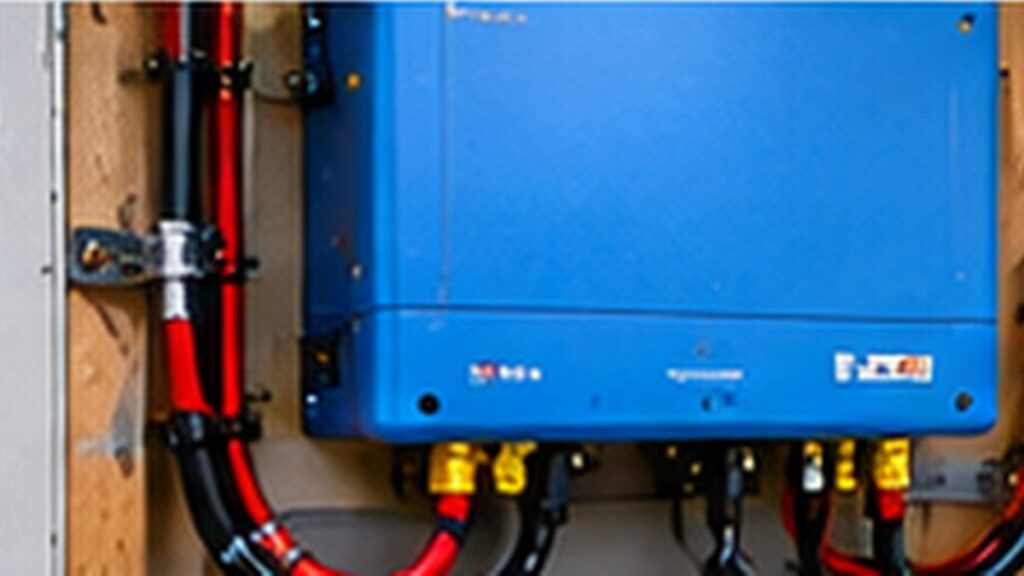
A 3,000 W pure sine wave inverter can run most single household appliances, including a refrigerator, microwave, coffee maker, hair dryer, circular saw, well pump up to about 1 HP, and a 13,500 BTU RV air conditioner (ideally with a soft starter). What it cannot do is run several big loads at once, and it needs a battery bank that can supply up to 280 A at 12 V or 140 A at 24 V.
Inverter size calculator
Estimates use the formulas explained in this guide. Plan a complete system with the all-in-one calculator →
Appliances a 3,000 W inverter can run
| Appliance | Running watts | Start-up surge | Works on 3,000 W? |
|---|---|---|---|
| Refrigerator | 100 – 200 W | 600 – 1,200 W | Yes |
| Chest freezer | 60 – 100 W | 400 – 700 W | Yes |
| Microwave (1,000 W cooking) | 1,300 – 1,600 W input | Low | Yes |
| Coffee maker | 800 – 1,200 W | None | Yes |
| Toaster | 800 – 1,500 W | None | Yes |
| Hair dryer | 1,200 – 1,800 W | None | Yes |
| Electric kettle | 1,500 – 2,200 W | None | Yes, alone |
| Circular saw | 1,200 – 1,500 W | 2,500 – 3,500 W | Usually (needs strong surge) |
| 1/2 HP well pump | 750 – 1,000 W | 2,000 – 3,000 W | Yes |
| 13,500 BTU RV air conditioner | 1,300 – 1,600 W | 3,000 – 4,500 W | With a soft starter |
| 5,000 BTU window AC | 450 – 500 W | 1,200 – 1,500 W | Yes |
| Space heater | 1,500 W | None | Yes, but drains batteries fast |
| Induction cooktop (single) | 1,800 W | None | Yes, alone |
Surge figures vary widely by model. Check the appliance label and your inverter’s surge rating and duration; see inverter surge vs continuous rating.
What it cannot run
- Central air conditioning (3 to 5 kW running, much more to start).
- An electric oven, clothes dryer or tank water heater (most are 240 V and 3 to 5 kW or more).
- A microwave, kettle and coffee maker all at the same time.
Battery current at 3,000 W
Battery amps = 3,000 ÷ (battery voltage × 0.90)
| Battery bank | Current at full load |
|---|---|
| 12 V | 278 A |
| 24 V | 139 A |
| 48 V | 69 A |
At 12 V, that current needs very heavy cables (typically 4/0 AWG for short runs) and a 300 A-class fuse. A 24 V system is a better match for a 3,000 W inverter. See 12V vs 24V vs 48V.
The batteries must also be able to supply that current. Three 12 V 100 Ah lithium batteries with 100 A BMS boards in parallel can just about deliver 278 A; two cannot. See how many batteries for a 3,000 W inverter.
How long will it run?
Runtime = usable battery Wh × 0.90 ÷ load watts.
With a 12 V 300 Ah LiFePO4 bank (about 3,260 Wh usable):
| Load | Runtime |
|---|---|
| 3,000 W (full load) | about 1 hour |
| 1,500 W (microwave) | about 2 hours |
| 500 W (fridge + TV + lights) | about 6 hours |
| 150 W (fridge average) | about 20 hours |
Idle draw
A 3,000 W inverter typically draws 20 to 50 W with nothing plugged in. Left on all day, that is 0.5 to 1.2 kWh, a big share of a small battery bank. Use power-saving or search mode if available. See inverter idle power draw.
Is 3,000 W the right size for you?
List what runs at the same time and follow what size inverter do I need. Then enter your daily usage in the solar calculator to size the panels and batteries that will keep it running.
Worked example: a realistic day on a 3,000 W, 24 V system
| Time | Running loads | Total |
|---|---|---|
| 7:00 | Coffee maker, fridge, lights | about 1,250 W |
| 12:00 | Microwave, fridge, laptop, fan | about 1,800 W |
| 15:00 | 5,000 BTU window AC, fridge, TV | about 750 W |
| 19:00 | Induction hob (one zone), fridge, lights, TV | about 2,150 W |
| 23:00 | Fridge, router, fan | about 250 W |
Every moment stays below 2,400 W (80% of rating), so the inverter runs cool. The day’s energy is about 6 kWh, so the battery and solar must be sized for that. See how many batteries for a 3,000 W inverter.
What happens if you overload it
- Above continuous rating for a short time: many inverters allow 110 to 150% for seconds to minutes, then shut down.
- Above surge rating: immediate shutdown (overload fault).
- Repeated overloads: heat stress shortens the inverter’s life.
Using a 3,000 W inverter in an RV
- Most 30-amp RVs can run everything except the roof AC for long periods.
- With a soft starter and 400 to 600 Ah of lithium, short AC runs are possible.
- Fit an inverter with a built-in transfer switch so shore power passes through automatically.
See RV 30-amp solar system size.
Common mistakes
- Running a kettle and microwave together (about 3,500 W combined).
- 12 V with thin cables, causing voltage drop and shutdowns.
- Ignoring idle draw when the inverter is on all day for small loads.
Quick yes/no list for a 3,000 W inverter
- Fridge + microwave together: yes
- Kettle + microwave together: no
- 1/2 HP well pump: usually yes (with good surge)
- Hair dryer on high: yes
- Electric oven: no
- 13,500 BTU RV AC: yes with soft starter
FAQ
Can a 3,000 W inverter run a refrigerator and microwave together?
Usually yes: about 150 W + 1,500 W = 1,650 W, with enough margin left for the fridge’s start-up surge.
Can a 3,000 W inverter run a house?
Only essential loads, one big appliance at a time. A whole home usually needs 5,000 W or more. See essential loads backup.
Will a 3,000 W inverter run a 1.5 ton AC?
A modern inverter-type 1.5 ton AC (around 1,200 to 1,800 W running) often can, especially as variable-speed compressors have low start-up surge. A fixed-speed unit’s start surge may trip it. See solar for a 1.5 ton AC.
Can a 3,000 W inverter run a washing machine?
Yes, a cold-wash front loader easily; washers with internal heaters may use up to 2,500 W while heating, close to the limit.
Can a 3,000 W inverter run a well pump?
Up to about 1/2 to 3/4 HP if it has strong surge capability, especially low-frequency designs.
Can a 3,000 W inverter run a 1 ton AC?
Usually yes for an inverter-type 1 ton AC (about 1,000 to 1,200 W at full speed).
Related guides
- Pure Sine Wave vs Modified Sine Wave Inverter: Does It Matter?
- Split-Phase (120/240V) Off-Grid Inverters Explained
- Solar Generator vs Gas Generator: Which Is Better for Backup?
- Inverter Efficiency Explained (and How Much Power You Lose)
Sources and further reading
- U.S. Department of Energy: Inverters and Grid Services Basics: what inverters do and the main types.
- ENERGY STAR: efficiency ratings and energy use of certified appliances.
- Battery University: BU-402 What Is C-rate?: charge and discharge rate versus capacity and runtime.